A versatile and highly modular monitoring instrument for shelf seas
Storing CO₂ in subsea geological formations onshore and offshore is a promising way of capping greenhouse gas emissions. The storage process however disturbs geological formations and can induce microseismic events which have to be monitored.
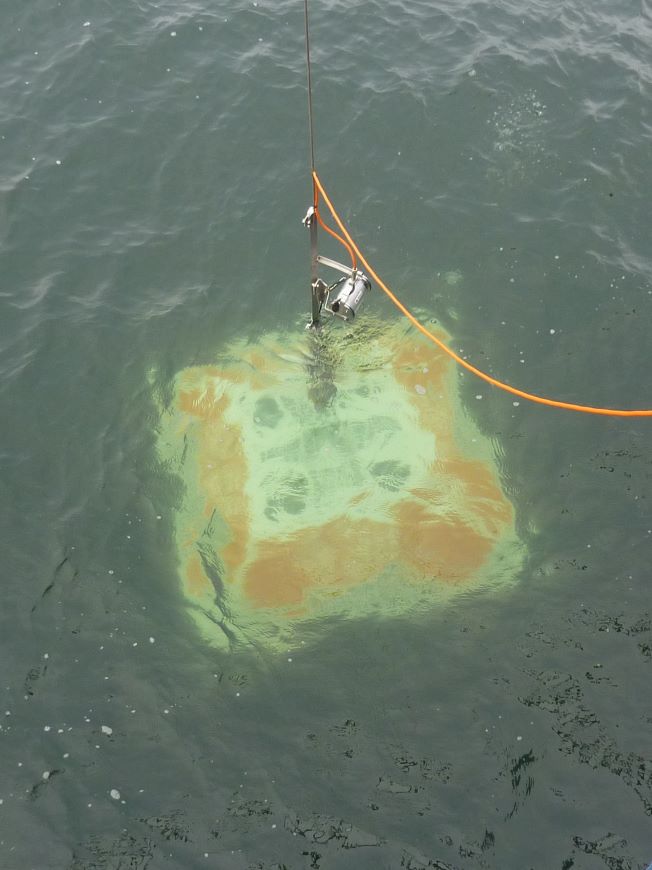
The K.U.M. TIAMAT ocean bottom node is an innovative and cost-effective solution for the long-term monitoring of those subsea CO₂ storage formations. It is highly modular and can be operated either autonomously for extended periods or cabled for real time data transmission.
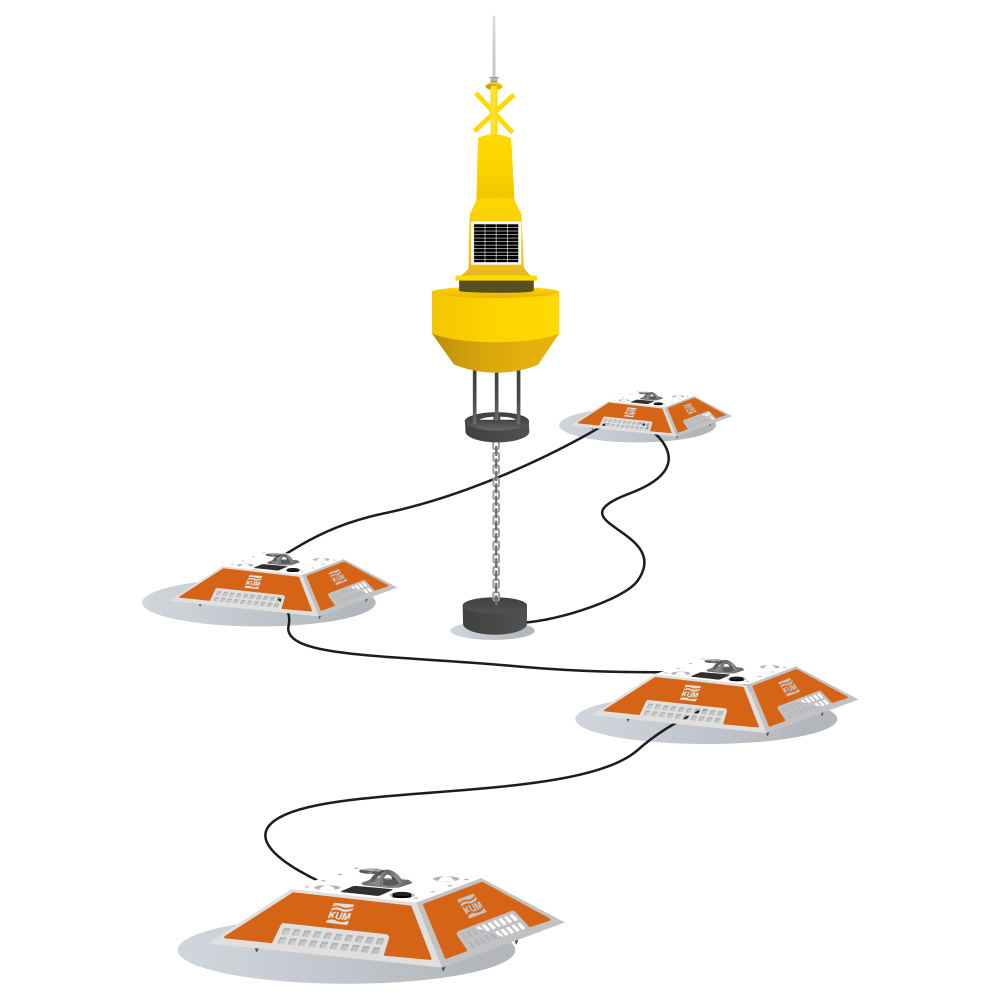
For optimal adaption to various monitoring requirements, the TIAMAT nodes can be equipped either with broadband seismometers or with geophones. The flat outline is designed to withstand displacement by bottom trawling fisheries and reduce current-induced noise to an absolute minimum. For monitoring of a complete storage site a deployment of multiple TIAMAT nodes is required. Several deployment configurations are possible.
- Autonomous, ideal for baseline seismicity detection
- Cabled and buoy-aided, ideal for realtime event detection
- Cabled and infrastructure-tied, ideal for realtime event detection
- Autonomous with acoustic or optical modem for remote data retrieval